
































Key Takeaways:
-
Silk sleep masks reduce friction, helping prevent sleep lines and skin irritation.
-
Cotton absorbs moisture, which can remove skincare and natural facial oils overnight.
-
Silk feels smoother and lighter, while cotton feels thicker and slightly textured.
-
Choose silk for skin benefits, cotton for affordability and easy maintenance.
Choosing between a silk and cotton sleep mask sounds simple — until you actually start looking.
Some people swear by silk. Others say cotton is breathable, affordable, and fine. And honestly? Both sides have a point.
But the fabric sitting against your skin for 7–8 hours every night does more than you might think. It affects friction, moisture retention, and whether you wake up with lines on your face.
Here's what you actually need to know — plus where a high-quality mulberry silk option like the Blissy Sleep Mask fits in.
What Is a Sleep Mask and Why Does Material Matter?
A sleep mask does one job: block light so your brain can settle into a deeper, more restful sleep. Whether you're a shift worker, a light-sensitive sleeper, a frequent flier, or just dealing with a bedroom that never gets fully dark — a good sleep mask can be a total game-changer for sleep quality.
But here's what most people don't think about: that mask is sitting directly on some of the most delicate skin on your face for hours at a time. The fabric makes contact with your eye area, your temples, the bridge of your nose, and your cheeks — all night long.
That means the material affects:
-
Friction — how much drag the mask creates against your skin
-
Moisture — whether it absorbs your natural oils and skincare, or leaves them where they belong
-
Pressure marks — whether you wake up with lines or creases on your face
-
Breathability — how well the mask regulates temperature overnight
That's where silk and cotton behave very differently.
Silk vs Cotton Sleep Mask: Quick Comparison
The fastest way to understand the difference between a silk and cotton sleep mask is side by side. Here's how the two fabrics stack up across the features that matter most:
|
Feature |
Silk |
Cotton |
|---|---|---|
|
Skin friction |
Very low |
Medium |
|
Moisture absorption |
Low (retains your skincare) |
High (absorbs oils and product) |
|
High |
High |
|
|
Feel on skin |
Smooth, lightweight |
Soft but slightly textured |
|
Hypoallergenic properties |
Natural, resists dust mites |
Can harbor allergens |
|
Less likely |
More likely with rough texture |
|
|
Price |
Higher |
Lower |
|
Care |
Gentle/delicate care needed |
Easy washing, frequent washing OK |
Quick Answer: Silk is generally better for skin comfort and reducing friction, while cotton is better for affordability and moisture absorption.
Silk vs Cotton Sleep Mask: Which One Is More Comfortable?
Comfort is the number-one reason people buy a sleep mask — and it's also the thing most reviews debate. Silk fans love the lightweight, barely-there feel. Cotton fans appreciate the familiar softness. But if you dig into what real users say, a surprising pattern emerges.
Most people assume fabric determines comfort. But in reality, fit and pressure matter just as much.
Why Silk Feels Different
Silk glides across your skin rather than dragging against it. The smooth texture creates very little resistance, which means less pulling on delicate skin around your eyes as you shift positions during the night. Most people who try a silk eye mask describe it as feeling lightweight — almost like wearing nothing at all.
Silk is also a naturally breathable material, which helps prevent that "trapped heat" feeling some masks create.

Where Cotton Holds Its Own
Cotton sleep masks are breathable and familiar. If you've been sleeping on cotton sheets your whole life, the feel won't be a surprise. Some users prefer the slight texture and weight — especially if they run warm and want a mask that absorbs rather than retains heat.
That said, cotton can feel slightly bulkier than silk, and some masks have a texture that can feel rough against sensitive skin around the eyes after hours of contact.
The Fit Factor
Whether you're choosing silk or cotton, look for:
-
An adjustable head strap so the mask isn't too tight
-
A contoured or cushioned design that reduces pressure around the nose bridge and eye area
-
A good nose seal to prevent light leaks without pressing uncomfortably on your face
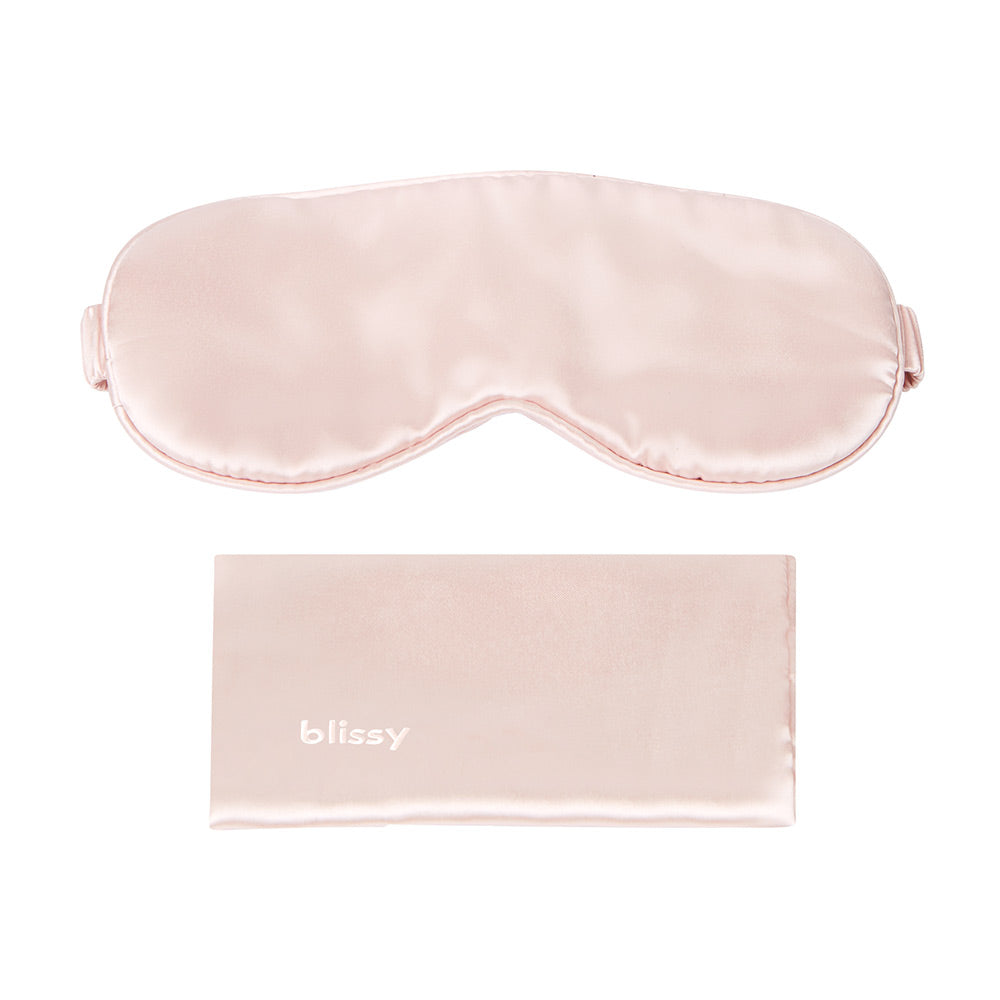
The Blissy Sleep Mask is made from 100% Grade 6A, 22-momme mulberry silk, with a flexible fit designed to avoid tight pressure points. Customers describe it as feeling "smooth on my face" and comfortable enough to wear all night — even for side sleepers.
Do Silk Sleep Masks Help Prevent Sleep Lines or Wrinkles?

Yes — and the reason comes down to friction. Every time your mask shifts against your skin during the night, it creates drag. Over time (and over many nights), that repeated friction can contribute to temporary creases — and eventually, deeper sleep wrinkles.
If you've ever woken up with lines across your cheeks or forehead, your mask could be part of the reason.
What the Research Shows
Silk is clinically proven to reduce surface friction compared to cotton. A 2025 Kosmoscience study on Blissy's 100% mulberry silk found that after 28 days of nightly use, 94% of participants showed clinically visible improvement in skin smoothness, and dermatologists measured an 8% average reduction in visible wrinkles. That's a meaningful result from a fabric change alone.
Cotton, by contrast, has a slightly rougher surface that creates more drag — especially on the delicate skin around the eye area where the mask sits for hours.
The Silk Advantage for Skin
The Blissy Sleep Mask's silk surface is smooth enough to glide gently across skin all night. As one customer put it: "Ensures my face does not get creases! Totally recommend." That smooth glide isn't just a luxury feeling — it's doing something real for your skin overnight.

Why Do Some Sleep Masks Leave Marks on Your Face?
Waking up with indentations or marks on your face after wearing a sleep mask is one of the most common complaints — and it's almost never just about the fabric.
The Real Causes of Sleep Mask Marks
Three things tend to cause marks:
-
Tight elastic straps — if the strap is too snug, it presses into your skin all night
-
Flat, non-contoured mask design — flat masks press directly onto your eyelids and surrounding skin, creating pressure marks
-
Rougher fabrics — more texture = more friction = more opportunity for the mask to imprint on skin
How to Avoid It
Look for a mask with:
-
An adjustable strap you can loosen to reduce pressure
-
A contoured or cushioned eye cup design that keeps fabric lifted off your eyelids
-
A smooth surface material like silk that doesn't drag or press
The Blissy Profile Sleep Mask features an elevated cushion around the eye area specifically designed to keep pressure off your lids — ideal if you have lash extensions or just want to wake up without any imprinting. Multiple reviewers note it "fits well" and "stays in place" without leaving any marks behind.

Silk Sleep Masks: Benefits and Downsides
Silk sleep masks have earned a devoted following — and for good reason. But they're not for everyone. Here's an honest look at both sides.
The Benefits of Silk
-
Ultra-low friction — silk glides rather than drags, reducing skin creasing and irritation
-
Helps retain skin's natural moisture — unlike cotton, silk doesn't absorb the oils or skincare you applied before bed
-
Naturally hypoallergenic — mulberry silk naturally resists dust mites, making it a smart choice for sensitive skin or allergy sufferers
-
Breathable and cooling — silk regulates temperature well, which is good news for hot sleepers
-
Lightweight feel — most people describe it as barely noticeable once it's on
Dermatologist Dr. Mara Weinstein Velez, MD puts it simply: "The studies also show that the skin's hydration and softening is preserved when using Blissy." That same principle applies to any silk product sitting on your face overnight — including a sleep mask.
The Downsides of Silk
-
Higher price point — quality silk costs more than cotton, full stop
-
Requires more careful washing — hand washing or a mesh bag with mild detergent is recommended to preserve the fabric
Think of it less as a splurge and more as an investment. Most people who switch to silk don't go back.
What to Look for in a Silk Sleep Mask
Not all silk sleep masks are made the same.
Look for 100% mulberry silk (not blended or synthetic), a momme weight of 22 for durability, and OEKO-TEX certification for safety. The Blissy Sleep Mask checks all three boxes — 100% Grade 6A, 22-momme mulberry silk, OEKO-TEX certified, and dermatologist-approved.



Cotton Sleep Masks: Benefits and Downsides
Cotton isn't the wrong choice — it's just a different one. Depending on what you're looking for, it might be exactly what you need.
The Benefits of Cotton
-
Affordable — cotton masks are widely available at a lower price point
-
Breathable — cotton allows for good airflow and is a familiar feel for most sleepers
-
Easy to wash — cotton holds up well to frequent washing without special care
-
Absorbs moisture — if you run warm and want a fabric that wicks sweat, cotton can help.

The Downsides of Cotton
-
Higher friction — even soft cotton has more texture than silk, which can create more drag on skin
-
Absorbs your skincare — moisture absorption works both ways; cotton pulls your natural oils and applied products off your face
-
More likely to leave pressure marks — especially if the mask design is flat and the strap is firm
-
Can be rougher on sensitive skin — for acne-prone skin, the friction and bacteria-retaining nature of cotton can be a downside
Cotton is a perfectly functional sleep accessory. It's just not optimized for skin the way silk is — and for many people, that distinction matters after a few weeks of nightly use.
Best Sleep Mask Design According to Real Users
Here's the insight most "silk vs cotton" comparisons miss: the design of your mask matters just as much as the fabric.
You could have the most luxurious silk eye mask in the world — but if the strap digs in, the nose bridge leaks light, or the shape doesn't fit your face, you'll toss it after a week.
Features Real Users Say Make the Difference
-
Contoured eye cups — space around your eyes means no pressure on lids, no lash damage, and no imprinting on skin
-
Adjustable head strap — so you can dial in the fit without pulling too tight
-
Good nose seal — blocks light without pushing uncomfortably on your nose bridge
-
Lightweight construction — especially important for side sleepers who feel every bit of extra pressure
One reviewer summed it up well: "It is simply the best! You can hardly even feel it touch your face, so silky and smooth!" That combination of smooth silk fabric and thoughtful ergonomic design is what separates a great mask from a mediocre one.
The Blissy Sleep Mask brings both together — 100% mulberry silk surface for gentle skin contact, and a design built to block light completely without pressing or pulling. And for lash extension wearers, the Blissy Profile Sleep Mask adds an elevated cushioned eye contour specifically to protect lash shape overnight.

How to Choose: Silk or Cotton? (Quick Buyer Guide)
Still deciding? Here's a simple way to think about it.
Choose a Silk Sleep Mask If You Want:
-
Smoother, less irritated skin in the morning
-
Fewer sleep lines and creases
-
A mask that won't absorb your nighttime skincare
-
A hypoallergenic option for sensitive or acne-prone skin
-
A premium, luxurious feel against your skin
Choose a Cotton Sleep Mask If You Want:
-
A lower upfront cost
-
A mask you can throw in the wash without any special care
-
A familiar, textured fabric feel
-
Higher moisture absorption for hot, sweaty sleepers
Pro Tip: If skin comfort is your priority, silk is almost always the better long-term choice — especially once you see the difference after a few nights.

Final Recommendation
Both silk and cotton sleep masks do the core job — they block light and help you get a better night's sleep. But they serve different needs, and the right choice really does depend on what matters most to you.
If you want the best option for your skin — fewer lines, less friction, moisture retention, and a hypoallergenic surface — silk is the clear winner. Cotton is a solid, budget-friendly option, but it wasn't designed with skin health in mind the way silk was.
If you're ready to try silk, start with a high-quality mulberry silk option like the Blissy Sleep Mask. It's made from 100% Grade 6A, 22-momme mulberry silk, OEKO-TEX certified, and designed for all-night comfort. Backed by over 2 million Blissy customers and a 60-night guarantee, it's a low-risk way to find out what the difference actually feels like.
Once you notice it, it's hard to go back.


