


































Key Takeaways:
-
100% mulberry silk is the best pillowcase for healthier, smoother skin.
-
Silk reduces friction, helping prevent acne, irritation, and sleep wrinkles.
-
Choose 22-momme, Grade 6A silk with OEKO-TEX® certification for best results.
-
Wash silk pillowcases every 7–10 days to maintain skin-friendly hygiene.
You wash your face every night. You use your serums, your moisturizer, your spot treatment. Then you lay your head on the same pillowcase you've used for years — and it can work against your skincare routine while you sleep.
Pillowcase fabric matters more than most people realize. Rough or absorbent materials can rub against your face, soak up your skincare, and hold onto bacteria against your skin for hours every night. Over time, that friction and buildup can show up as breakouts, irritation, and sleep lines that turn into deeper creases.
So what type of pillowcase is best for skin? The short answer: pure mulberry silk. Here's why silk outperforms satin and cotton, and how to pick the right one.
What Type of Pillow Case Is Best for Skin?
Silk pillowcases are generally the best choice for skin, especially for people dealing with acne, dryness, or visible signs of aging. Silk's smooth surface creates less friction against your face than cotton or satin, which means fewer sleep creases and less irritation for reactive skin types.
Silk is also a natural protein fiber, not a synthetic material. Natural fibers tend to be gentler on skin and don't absorb your nighttime skincare the way cotton does. That combination — low friction plus low absorbency — is why dermatologists bring up silk more than any other pillowcase fabric.
Why Dermatologists Recommend Silk Pillowcases
Dermatologists talk about pillowcase fabric because your face touches it for roughly a third of every day. A few things happen during those hours that are worth understanding.
Friction and mechanical irritation
Rougher fabrics like cotton grip the skin slightly as you move in your sleep. That repeated tugging is a form of mechanical irritation, and it can aggravate already-inflamed or acne-prone skin. Smooth fabrics like silk let your skin glide instead of drag.
Moisture and the skin barrier
Your skin barrier relies on staying hydrated to function well. Fabrics that pull moisture away from your skin — like absorbent cotton — can contribute to a small amount of transepidermal water loss (TEWL), or moisture escaping through the skin overnight. Fabrics that don't absorb as much, like silk, help skin hold onto that moisture instead.
Buildup and "mechanical acne"
Oil, sweat, and dead skin cells build up on any pillowcase over the course of a week. On a rougher, more absorbent surface, that buildup sits closer to the skin and can contribute to what's sometimes called mechanical acne — breakouts caused by friction and pressure rather than hormones or diet.
Pressure and fine lines
Some dermatologists also point to the pressure and drag your face experiences from repeated contact with a stiffer fabric. Reducing that pressure may help support skin's appearance over time, though this effect is gradual and varies person to person.
None of this means a pillowcase alone will fix your skin. But fabric is one of the few nighttime variables that's easy to control.
Silk vs. Satin vs. Cotton vs. Bamboo: Which Fabric Wins for Skin?
Not all pillowcase fabrics behave the same overnight. For acne-prone or sensitive skin in particular, choosing the best pillowcase material for breakouts can make a noticeable difference. Here's how the four most common options compare.
Silk
Silk is a natural protein fiber with a naturally smooth, low-friction surface. It helps skin retain moisture and natural oils instead of soaking them up, and it's naturally hypoallergenic, which also makes it resistant to dust mites, which is why silk pillowcases are often recommended over cotton for skin health.
Satin
Here's something a lot of people don't know: satin refers to a weave, not a fabric type. You can weave satin from silk, but most satin pillowcases on the market are made from polyester satin, a synthetic material, and direct comparisons between satin and silk pillowcases consistently show silk as the better option for skin.
Polyester satin can look and feel similar to silk at first touch, but it behaves differently overnight. It can trap heat, which may contribute to night sweats and irritate acne-prone skin. Synthetic fibers also aren't naturally hypoallergenic, so satin can be more likely to bother reactive skin types, especially for people who already find that satin is too harsh for sensitive skin.
Cotton
Cotton is common, affordable, and easy to find. Standard cotton has a more textured surface than silk, though, which creates more friction against your face — a factor linked to sleep creases. Cotton is also a highly absorbent fabric, which is useful for soaking up sweat but also means it can pull moisture and skincare products right off your skin overnight, similar to how other synthetic options like polyester fall short of silk for skin and hair health.
Bamboo
Bamboo-derived fabrics are breathable and moisture-wicking, which helps hot sleepers stay cool. They're a step up from cotton for softness, but they still don't match silk's low-friction, moisture-retaining surface, and even silk can have downsides if you don't choose high-quality 6A mulberry silk pillowcases that are designed for durability and easy care.
Fabric Comparison Table
|
Feature |
Silk |
Satin |
Cotton |
Bamboo |
|---|---|---|---|---|
|
Friction |
Lowest |
Low-Medium |
Medium-High |
Low-Medium |
|
Moisture retention |
Excellent |
Good |
Poor |
Good |
|
Absorbs skincare |
Minimal |
Moderate |
High |
Moderate |
|
Breathability |
Excellent |
Fair |
Good |
Excellent |
|
Acne-prone skin |
Best fit |
Fair |
Fair |
Good |
|
Sleep wrinkles |
Best fit |
Good |
Poor |
Good |
|
Sensitive skin |
Best fit |
Fair |
Good |
Good |
|
Hypoallergenic |
Yes |
Usually no |
No |
Sometimes |
|
|
|
|
|
|
What Is the Healthiest Fabric for a Pillowcase?
The healthiest fabric for a pillowcase is 100% mulberry silk. "Healthiest" here means the fabric that's least likely to irritate skin, trap bacteria, or dry out your face overnight, and understanding terms like 6A grade, 22-momme, and 100% mulberry silk can help you spot that quality when you shop.
Silk checks the most boxes at once:
- Low friction
- Low absorbency
- Natural hypoallergenic properties
- Smooth surface
- Dissipates head (unlike synthetic fabrics)
Bamboo comes closest as a runner-up, mainly because of its breathability. Cotton and polyester satin fall further behind, mostly because of moisture absorption and, in satin's case, heat retention.
If you have specific skin concerns — acne, eczema, rosacea, or visible fine lines — fabric choice is a small but meaningful lever, and silk is the option most consistently recommended for those concerns.
How Silk Pillowcases Help Acne-Prone Skin
Silk pillowcases may help reduce breakouts by cutting down on friction and bacteria buildup. As covered above, rougher fabrics create more mechanical irritation, which can aggravate acne-prone skin, and absorbent fabrics hold onto more oil and buildup between washes.
This has held up in clinical testing. In a shared panel study conducted by Princeton Consumer Research Corp (2024), a 100% mulberry silk pillowcase was tested for comedogenic potential (its tendency to clog pores) using repeated patch applications and follicular biopsy analysis. The pillowcase scored 0.01 on the comedogenic scale, compared to 2.56 for a known pore-clogging positive control, with no statistically significant difference from untreated skin. The conclusion: the silk tested was non-comedogenic and well-suited to acne-prone and sensitive skin.
Quick tips to support acne-prone skin overnight:
-
Look for a silk pillowcase with a hidden zipper closure so there's no rough hardware near your face.
-
Wash your pillowcase every 7 to 10 days to limit bacteria buildup.
-
Skip fabric softener, which can leave a residue that clogs pores.
How Silk Pillowcases Help With Aging Skin and Sleep Wrinkles
Silk pillowcases may help reduce visible signs of aging by minimizing the friction behind sleep lines. When skin presses into a rougher or more absorbent pillowcase night after night, that repeated pressure and drag can contribute to fine lines and creases over time, sometimes called "sleep wrinkles."
Because silk's surface is so smooth, skin can move more freely against it instead of getting pulled or creased. Silk also helps skin hold onto moisture, and better-hydrated skin tends to show fewer visible fine lines.
In a 28-day, Blissy-sponsored clinical study conducted by Kosmoscience on 36 adult women with mild to moderate wrinkles, nightly use of a 100% mulberry silk pillowcase led to:
-
94% of participants showing clinically visible improvement in skin smoothness, which supports the idea that high-quality Blissy silk pillowcases are a worthwhile beauty investment
-
A 67% reduction in fine lines
-
An 8% average reduction in visible wrinkles
A separate Kosmoscience study on wrinkle reduction, also Blissy-sponsored, found 83% of participants showed measurable wrinkle reduction after 28 days, with up to a 9% reduction in wrinkle intensity. Both studies reported no adverse effects.



What to Look for When Buying a Silk Pillowcase for Skin
If you're shopping for a silk pillowcase, not all silk pillowcases offer the same skin benefits. Check for these four things before you buy:
-
100% mulberry silk — the fiber type with the smoothest, most consistent surface
-
Grade 6A silk — the highest common quality grade, with fewer inconsistencies in the thread
-
22 momme or higher — a measure of how densely the silk is woven; higher generally means denser, higher-quality threads
-
OEKO-TEX® certification — confirms the fabric has been tested for harmful substances, which matters for sensitive or reactive skin
-
A hidden zipper closure — keeps the pillow secure without exposing hardware that could press into your skin overnight
An Example That Meets This Standard
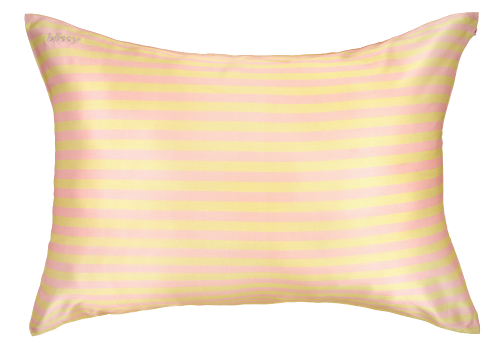
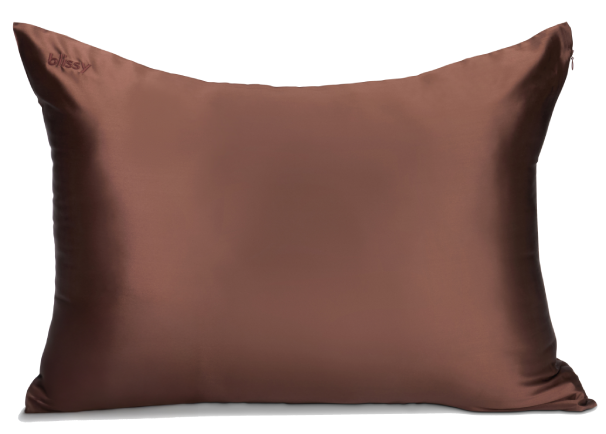
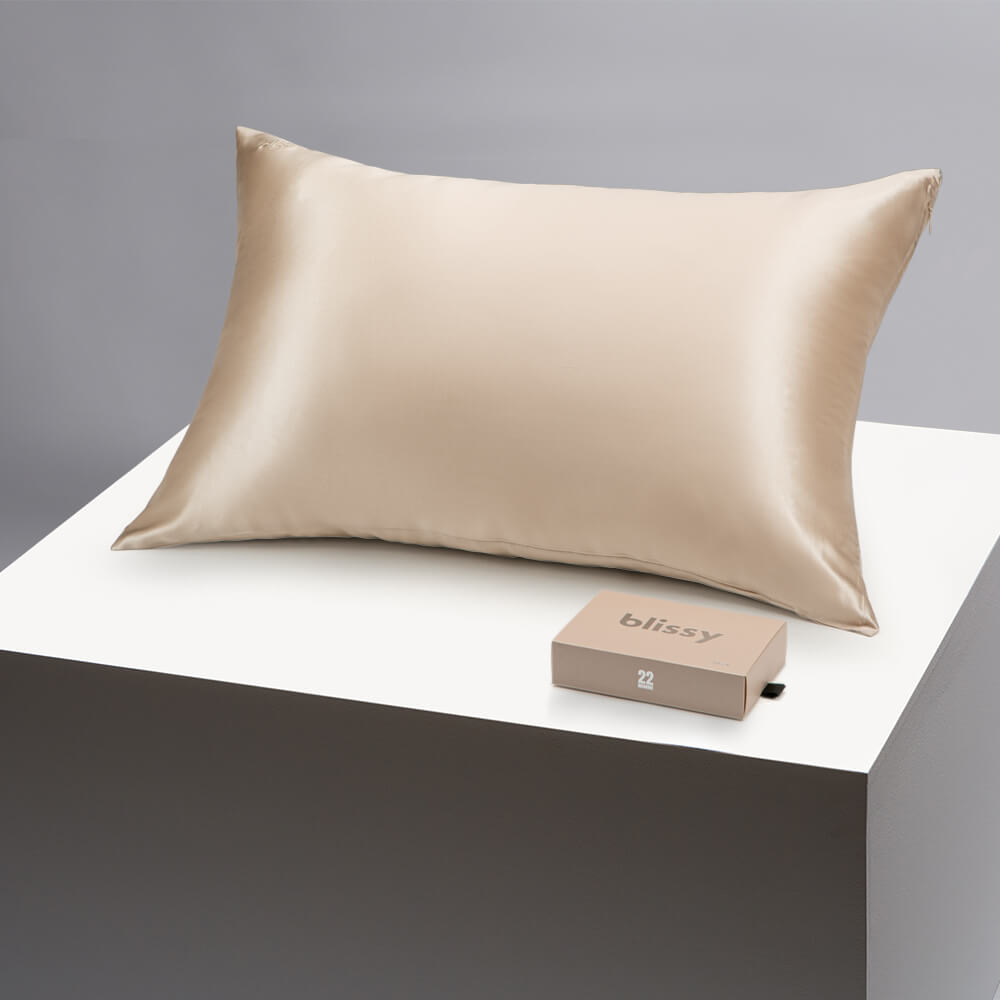
The Blissy Pillowcase is one product built to this exact spec: 22-momme, Grade 6A mulberry silk with OEKO-TEX® certification and a hidden zipper closure. The clinical studies referenced above were conducted on Blissy Pillowcases specifically, and side‑by‑side comparisons between Blissy and Slip silk pillowcases highlight how Blissy stacks up on quality, price, and return policies.
Dermatologists have weighed in directly. Dr. Aleksandra Brown, a board-certified dermatologist, says:
"As a board-certified dermatologist, I've seen how traditional pillowcases can sabotage your skin by trapping dirt and bacteria while absorbing your skincare products. That's why I recommend Blissy - the only dermatologist-backed, clinically-studied silk pillowcase, with 90% of users reporting clearer skin and improved skin health."
Good Housekeeping tested the pillowcase directly and reported that "the pillowcase looked and felt great after our laundering tests and maintained its smoothness once washed, which is a huge feat for delicate silk fabric." Vogue rated it "Softest Pillowcase," and it's backed by over 250,000 five-star reviews for those wondering where to buy high-quality mulberry silk pillowcases like Blissy.
How to Care for Your Silk Pillowcase
Proper care keeps a silk pillowcase working for your skin instead of against it. A dirty or damaged pillowcase can undo the benefits fairly quickly.
Silk pillowcase care checklist:
-
Wash every 7 to 10 days to prevent bacteria and oil buildup.
-
Use a mesh laundry bag when machine washing to protect the delicate fibers.
-
Choose a mild detergent made for silk, such as a pH-balanced silk wash formulated for delicate fibers, to help prevent your pillowcase from becoming stiff, rough, or damaged over time. Skip bleach and harsh chemicals.
-
Wash on the gentle cycle with cold or lukewarm water.
-
Air dry instead of tumble drying. Heat can damage silk fibers over time.
-
Store in a cool, dry place when not in use.


